
What is Every Door Direct Mail and Its Effectiveness
Every Door Direct Mail (EDDM®) is a USPS program that allows businesses to mail to every address on specific carrier routes without needing a mailing list—making it one of the most cost-effective ways to saturate neighborhoods.
What is Every Door Direct Mail (EDDM)?
Every Door Direct Mail (EDDM®) is a simplified direct mail service offered by the United States Postal Service that enables businesses to mail advertising materials to every residential or business address along specific postal carrier routes without purchasing or addressing a mailing list.
Unlike traditional direct mail that requires individual addressing and sorting, EDDM pieces are delivered in bulk to postal carriers who distribute them to every door on their assigned routes. This eliminates the need for purchasing mailing lists, printing individual addresses, or complex mail preparation—making EDDM one of the most streamlined and cost-effective direct mail options available.
EDDM is ideal for businesses with geographic service areas who want to achieve complete market penetration in targeted neighborhoods. Rather than guessing which households might be interested in your services, EDDM ensures your message reaches every potential customer in the areas you select.
The program was launched by USPS in 2011 to make direct mail more accessible to small businesses by reducing complexity and lowering costs. Today, EDDM is used by thousands of businesses—from local restaurants and service providers to national retailers—to drive awareness, generate leads, and increase sales in specific geographic markets.
How EDDM Works
The EDDM process is remarkably straightforward compared to traditional direct mail:
Step 1: Select Your Target Carrier Routes
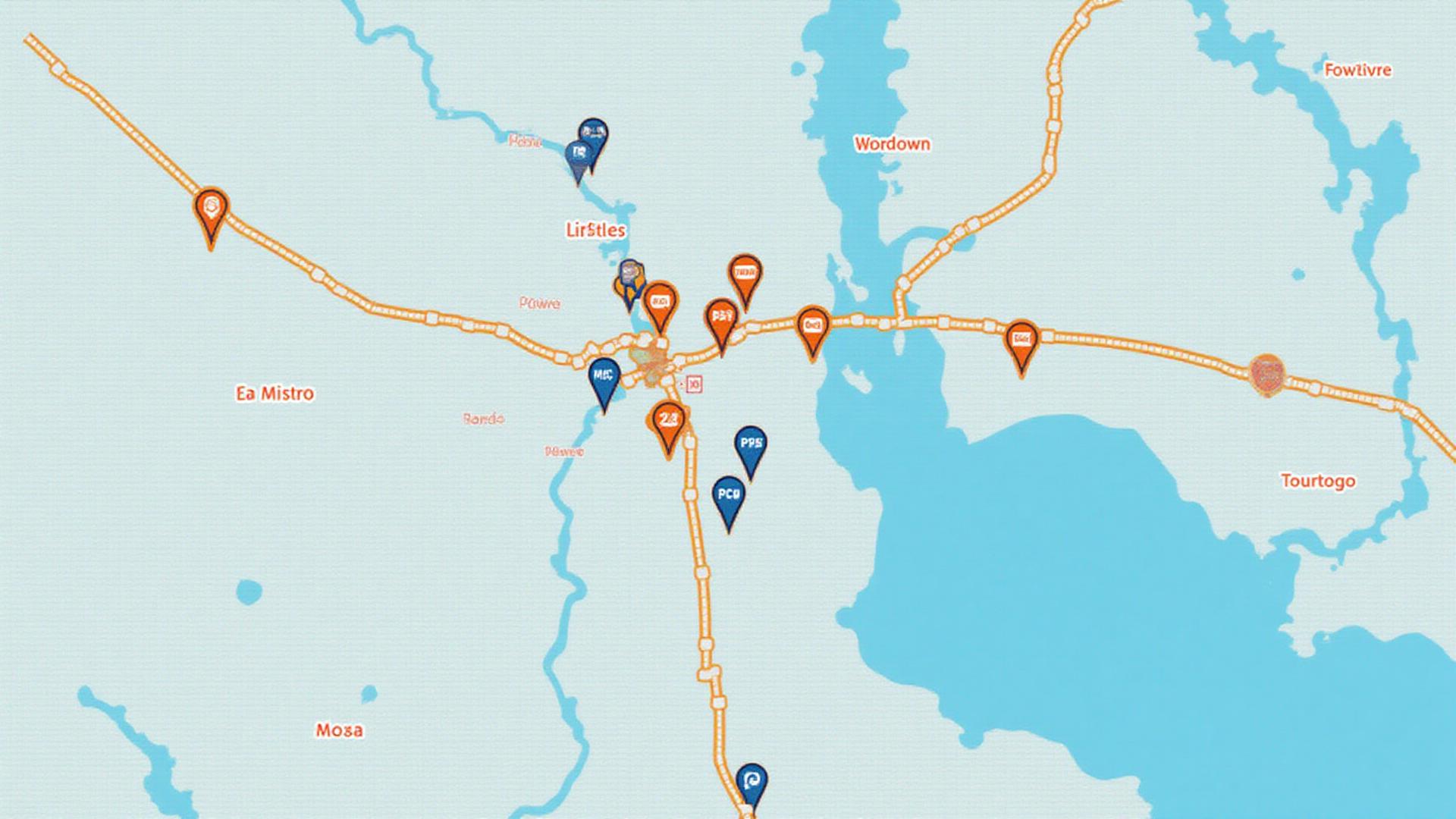
USPS divides the country into postal carrier routes—the specific paths mail carriers walk or drive each day. Each route typically contains 300-600 addresses (residential or business). Using the USPS EDDM Online Tool or working with a direct mail provider, you can browse maps and select specific carrier routes based on:
- Geographic location (neighborhoods, ZIP codes, cities)
- Address type (residential, business, or both)
- Demographic data (age, household size, income estimates)
- Route size (number of addresses on each route)
This geographic targeting allows precise neighborhood-level marketing. A roofing contractor might target older neighborhoods where homes need roof replacements. A restaurant could target residential routes within a 3-mile radius. An automotive service center might focus on business routes to reach fleet managers and commercial customers.
Step 2: Design Your Mail Piece
EDDM has specific size requirements. Your mail piece must be at least 6.25" x 11.5" and no larger than 15" x 12". The most common EDDM sizes are 6.5" x 9" and 8.5" x 11" postcards, as well as 11" x 6" or larger oversized postcards that command attention in the mailbox.
Design should focus on bold headlines, eye-catching imagery, clear calls-to-action, and compelling offers. Since every door receives your piece, your design must work hard to capture attention and motivate response. Professional design services ensure your EDDM piece stands out and drives action.
Step 3: Print Your Materials
EDDM pieces must include an EDDM indicia (postal marking) instead of traditional postage stamps or meters. The materials are printed without individual addresses—each piece is identical (or uses variable data for split-testing purposes).
Working with a full-service direct mail provider handles printing details, ensures USPS compliance, and manages quality control. Attempting to print EDDM materials yourself or through a standard print shop often leads to compliance issues and postal delays.
Step 4: Bundle and Deliver to USPS
EDDM pieces must be bundled by carrier route (facing slips identify which route each bundle serves) and delivered to the specific post offices that manage those routes. This preparation work requires knowledge of USPS regulations and proper bundling procedures.
Professional direct mail services handle all bundling, facing slip creation, and delivery to USPS facilities—ensuring your campaign enters the mail stream correctly and delivers on schedule.
Step 5: USPS Delivers to Every Door
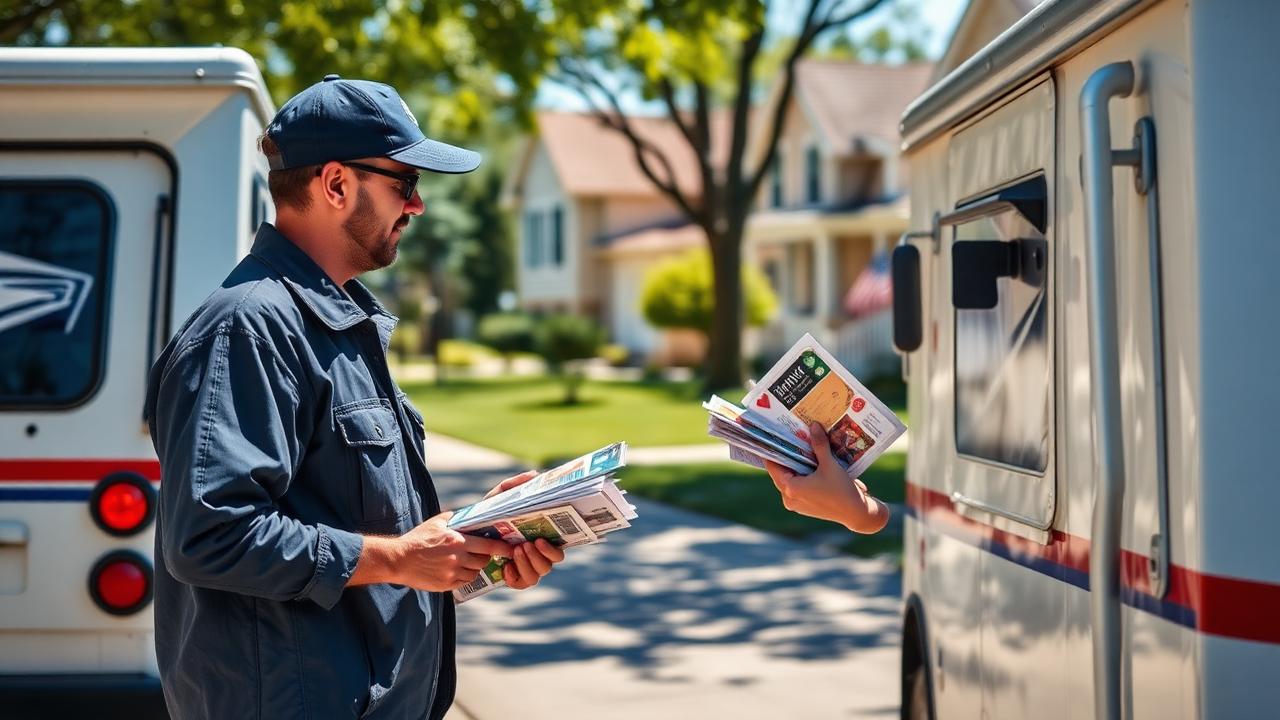
Mail carriers receive your bundles and deliver one piece to every address on their route. Delivery typically occurs within 7-14 days of USPS acceptance, though actual timing varies by season, volume, and location.
Recipients see "ECRWSS" (Enhanced Carrier Route Walk Sequence Saturation) and "RESIDENTIAL CUSTOMER" or "POSTAL CUSTOMER" where an individual address would normally appear. This generic addressing doesn't hurt response—recipients understand they're part of a neighborhood mailing and still engage with compelling offers.
EDDM Costs and Pricing
EDDM is one of the most affordable direct mail options available:
USPS Postage Rates
EDDM postage rates are significantly lower than standard mailing rates. Current EDDM postage is approximately $0.20-$0.22 per piece depending on weight and size. This compares extremely favorably to First-Class Mail ($0.68+ per piece) and even standard Marketing Mail with addresses ($0.46-$0.67 per piece).
The savings come from the simplified delivery process—no individual addressing means lower USPS processing costs, which are passed along to mailers as reduced postage rates.
Total Campaign Costs
All-in EDDM campaign costs (design, printing, bundling, and postage) typically range from $0.45 to $0.85 per piece depending on quantity, size, paper stock, and whether you use design services. Larger quantities achieve better per-piece pricing due to print economies of scale.
Example pricing for a 5,000-piece EDDM campaign using 6.5" x 9" postcards: Design ($199-$349 if not using free templates), Printing ($0.15-$0.25 per piece = $750-$1,250), EDDM prep and bundling ($0.05-$0.10 per piece = $250-$500), USPS postage ($0.20 per piece = $1,000). Total cost: $2,199-$3,099 or approximately $0.44-$0.62 per piece.
Cost Comparison
Compared to other marketing channels, EDDM delivers exceptional value. Digital display advertising typically costs $3-$10 per 1,000 impressions (CPM), but impressions aren't equivalent to physical pieces held in hand. Facebook ads might cost $0.50-$2.00 per click, but many clicks don't convert. Google Ads costs $2-$50+ per click in competitive industries.
EDDM's physical presence, extended lifespan in homes (averaging 17 days), and higher response rates often make it more cost-effective than digital alternatives for local businesses and service providers.
EDDM Effectiveness and Response Rates
EDDM campaigns consistently deliver strong response rates when executed properly:
Typical Response Rates
EDDM campaigns average 1-3% response rates for consumer audiences and 3-5% response rates when campaigns include compelling offers, professional design, and appropriate targeting. Response varies significantly by industry, offer quality, and timing.
Restaurants with limited-time coupon offers frequently see 3-5% redemption rates. Home services (HVAC, roofing, landscaping) with seasonal promotions achieve 1-2% inquiry rates. Retail stores announcing sales or new locations commonly generate 2-4% foot traffic increases.
Real-World ROI Examples
Consider a restaurant mailing 10,000 EDDM postcards to surrounding neighborhoods. Total cost: $6,000. Response rate: 3% (300 redemptions). Average ticket value: $45. Revenue generated: $13,500. ROI: 125% or 2.25X return. Plus, many respondents become repeat customers, multiplying long-term value.
A roofing company mails 8,000 EDDM postcards to neighborhoods with older homes. Total cost: $5,200. Response rate: 1.5% (120 inquiries). Conversion rate: 8% (10 jobs). Average job value: $12,000. Revenue: $120,000. ROI: 2,208% or approximately 23X return.
Factors Affecting EDDM Success
Several factors determine EDDM campaign performance:
- Route Selection: Better targeting drives better response. Choose routes matching your customer profile.
- Offer Quality: Compelling, time-limited offers dramatically outperform generic messaging.
- Design Impact: Professional, attention-grabbing design increases engagement and response.
- Timing: Seasonal campaigns aligned with customer need cycles perform best.
- Frequency: Multiple mailings to the same routes build recognition and trust, increasing cumulative response.
- Call-to-Action Clarity: Make it obvious what you want recipients to do and how to do it.
Comparing EDDM to Targeted Direct Mail
EDDM trades demographic precision for cost savings and simplicity. Targeted direct mail using purchased lists allows selection by age, income, interests, homeownership status, and hundreds of other data points—potentially driving higher response rates from precisely-matched prospects.
However, EDDM's lower costs often result in superior ROI despite slightly lower response rates. The decision between EDDM and targeted mail depends on your business model, customer profile, and whether geographic saturation or demographic precision matters more for your offer.
Best Businesses for EDDM
EDDM works exceptionally well for certain business types and marketing objectives:
Local Service Businesses
Businesses serving defined geographic areas see tremendous success with EDDM. Roofing contractors, HVAC companies, plumbers, electricians, landscapers, house cleaners, pest control services, and window installers can saturate their service areas efficiently. Since these businesses can serve nearly any household in their territory, reaching every door makes sense.
Restaurants and Food Services
Restaurants use EDDM to announce grand openings, promote special offers, drive weeknight traffic, and build takeout/delivery awareness. The entire neighborhood within a restaurant's delivery radius represents potential customers, making EDDM ideal. High-value coupons drive immediate redemption and trial.
Retail Stores
Local retailers—boutiques, hardware stores, automotive parts, sporting goods, furniture stores—use EDDM to promote sales, announce new inventory, drive foot traffic, and compete against big-box stores. Reaching every household ensures maximum awareness of special events and limited-time promotions.
Fitness Centers and Gyms
Gyms, yoga studios, martial arts schools, and fitness centers leverage EDDM to fill membership rosters, promote new member specials, and announce facility openings. Since fitness businesses benefit from geographic proximity (people prefer gyms close to home), neighborhood saturation makes strategic sense.
Healthcare and Dental Practices
Medical, dental, chiropractic, and veterinary practices use EDDM to attract new patients in surrounding neighborhoods. Practices opening new locations particularly benefit from EDDM's ability to quickly build awareness throughout their service area.
Real Estate Agents
Realtors use EDDM for neighborhood farming, promoting listings, announcing open houses, and building brand recognition. Saturating specific neighborhoods establishes agents as the local expert, leading to listing opportunities when homeowners decide to sell.
Automotive Services
Auto repair shops, oil change centers, tire stores, and car washes use EDDM to drive service appointments and promote seasonal maintenance campaigns. Vehicle owners throughout the service area represent potential customers.
EDDM Best Practices
1. Target Routes Strategically
Don't randomly select carrier routes. Study demographics, household characteristics, and geographic proximity to your business. Choose routes where your ideal customers live or work. Quality route selection dramatically impacts campaign performance.
2. Use Eye-Catching Design
Since every mailbox receives your piece, exceptional design is critical for capturing attention. Use bold colors, compelling imagery, large headlines, and clear value propositions. Professional design services ensure your EDDM piece stands out from competing mail.
3. Create Irresistible Offers
Generic messaging generates generic results. Develop compelling offers with clear value and urgency. "$50 off your first service" or "Free dessert with dinner entrée through December 31st" drives action. "Call for more information" does not.
4. Include Multiple Response Options
Make response easy with phone number, website URL, QR code, and physical location. Different customers prefer different contact methods—accommodate all preferences to maximize response.
5. Time Campaigns Strategically
Align EDDM mailings with seasonal needs and customer buying cycles. HVAC companies mail before summer cooling season. Landscapers target early spring. Tax professionals reach customers in January and February. Strategic timing increases relevance and response.
6. Mail Consistently
Single EDDM mailings build awareness, but consistent campaigns build trust and capture prospects at different stages of their buying journey. Develop a regular EDDM schedule—monthly or quarterly mailings to the same routes—to stay top-of-mind.
7. Track Response Meticulously
Use tracking mechanisms to measure campaign effectiveness: unique phone numbers (call tracking), dedicated landing pages with analytics, coupon codes to identify source, CRM systems to tag EDDM leads. Knowing what works allows optimization of future campaigns.
8. Integrate with Digital Marketing
Combine EDDM with digital retargeting for maximum impact. Use QR codes to drive traffic to landing pages. Retarget website visitors from EDDM campaigns with social media ads. Multi-channel integration amplifies results beyond what either channel achieves alone.
EDDM vs. Traditional Direct Mail
Understanding when to use EDDM versus traditional addressed direct mail helps maximize marketing effectiveness:
Choose EDDM When:
- Geographic saturation is your primary goal
- Your product/service appeals broadly to entire neighborhoods
- You want the lowest possible per-piece cost
- You're a local business serving defined areas
- You don't need demographic targeting beyond route-level data
- You want simplified mail preparation and faster turnaround
Choose Traditional Direct Mail When:
- Precise demographic targeting is critical (age, income, interests, etc.)
- You're offering high-ticket products/services requiring qualified prospects
- Personalization improves response (using recipient names, variable data)
- You need First-Class Mail speed and forwarding service
- Your customer base isn't geographically concentrated
- You're mailing to existing customer lists (house files)
Many businesses use both approaches strategically: EDDM for broad awareness and market penetration, followed by targeted direct mail to prospects who responded or fit ideal customer profiles. This layered approach maximizes reach while optimizing conversion.
Getting Started with EDDM
Launching an EDDM campaign is straightforward when working with experienced direct mail providers. While USPS offers online tools for self-service EDDM (EDDM Online Tool), most businesses achieve better results partnering with full-service providers who handle route selection, design, printing, bundling, and USPS delivery.
At IdentiReach, we manage every aspect of EDDM campaigns from start to finish. Our team helps you identify the best carrier routes for your business, develop compelling offers, create professional designs (or customize from our template library), handle all USPS compliance requirements, and deliver your materials on schedule.
We work with businesses across all industries—local services, restaurants, retail, healthcare, real estate, automotive, fitness, and more—to execute EDDM campaigns that generate measurable results and positive ROI.
Ready to reach every door in your target neighborhoods? Contact us for a free consultation and custom EDDM quote. We'll help you develop a campaign strategy that maximizes your marketing budget and delivers real business growth.